

Hello!
Hello!
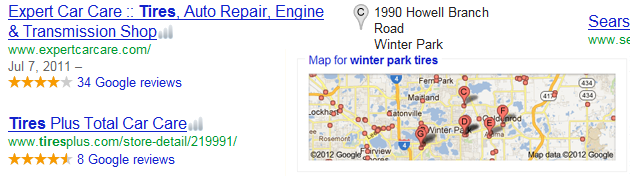
Any business that includes local customers into their business plan needs to be aware of the different sources available to market for their target audience. One of the biggest tools we use is Google Places for our local clients. It's free, provides analytics, and generally provides some decent traffic. Of course there are always new Google Updates that create another service to provide better ranking and results such as our local listings that we pushed early Jan 2011.

Hello!
Fishpunt Design Studio cultivates interns that attend local colleges such as Full Sail University, Valencia College, University of Central Florida (UCF), and Rollins College in the Orlando area. To help these potentially great students, we want you to submit projects for them! We are offering discounted rates for those that wish to have a web design student work on their project. Not all projects will be accepted, as they need to be mutually beneficial for the students.
Thank you for your interest, we are not accepting new clients through our online form. Please contact us by phone to schedule an appointment.

Many start-ups, entreprenuers, and small businesses fail to understand the importance of calculating their return on investment(ROI) from successful print marketing campaigns. Have you heard the term "It takes money to make money?" and thought that it meant hundreds or thousands of dollars? I disagree. To me the term means in order to make $5 you need to spend $1.
Color is one of the many tools we use to define the world around us. We often use color to describe our mood or setting. We use color to warn, excite, entice, scare, and advertise. We also subconsciously use color to define periods of time.
Color is perceived the same universally but has slight cultural differences in interpretation. Regardless of culture, it has a strong emotional impact on the human brain. There are certain colors in nature that universally signal danger, as found in the brightly colored and venomous Eastern Coral Snake and in poisonous Holly Berries.
I recently read the marketing classic “Positioning: The Battle for Your Mind” from Ries and Trout (2001) and much of the strategies that the authors discuss are quite obvious and straightforward but are often overlooked because we just love to over-analyze and complicate things.
First off, positioning—how you’re going to brand the product, service or company—is about claiming a place in the consumer’s mind for the brand and fixing it there, preferably permanently.
The question is: with all the information that’s going into the prospect’s mind—about 100,500 words a day from all sorts of online and offline sources—the message will get lost in the melee.
You have to battle for messaging supremacy with a wide swath of industries and markets, products and services every moment of every day. But the consumer can only take so much and at some point, will refuse to accept anything else into her mind. Beyond the saturation point, the consumer’s mind will remain blank, numb and unresponsive to the marketing message. In which case, you’ll be wasting time and precious resources.
The solution: oversimplify the message. Make it short, sweet, sharp, tight, quickly digested, and easily understood. In short, KISS (keep it simple, why don’t you?)!
Don’t give the prospect a difficult time understanding the message. Use clever presentation—including language—only if it helps the prospect grasp what you’re saying. Otherwise, steer clear of clever or funny messaging that does nothing for the branding.
But creating a message that the consumer can easily grasp and act on is just one part of positioning. The other part is how to brand the offering effectively so you can fix the brand in the consumer’s mind.
The best and easiest way to create and fix a position for the product or service offering in the prospect’s mind is to be first in her mind.
The brand firsts are the easiest to remember and has the largest market share compared to those that follows next. Right off the bat, who’s the first man on the moon? Neil Armstrong. The first US president? George Washington. The first air conditioner? Carrier. The first double-edged safety razor? Gillette. The first cornflakes? Kellogg’s. The first photocopier? Xerox. To this day, these brands enjoy the leadership position in their markets.
Those who came next, or the seconds, are consigned to obscurity. Who’s the second US president? What is the second cornflakes brand to enter the market? The second razor? The second air conditioner? If the consumer remembers any of these seconds at all, that’s because these brands were able to own a niche that’s just as memorable as the firsts.
So in a positioning world where the firsts are already fixed in the prospect’s mind, how do you create the own immovable branding?
Find a hole and fill it. Often, the knee jerk reaction to latecomers in a particular product or service category is the “me-too but better” branding.
The problem with this is that consumers already have a fixed brand in that category and research says that the “first” position is the hardest to dislodge in the mind. Add to that, consumers often buy the same brand that they did on the last time they bought.
If you’re a Johnny-come-lately, the best bet is in finding a hole in the prospect’s mind and then grabbing it quickly before somebody else does. The market leader has the largest size in the market? The Volkswagen Beetle carved a profitable niche of its own by leveraging its compact size. Ries and Trout also suggest exploring the high-price, low-price marketing holes; focused niches; gender or age-related positioning; distribution; and so on.
Change the prospect’s mind about the leading brand. In a word, repositioning the competition. Ries and Trout says it succinctly: “to move a new idea or product into the mind, you must first move an old one out.”
The premise for this is the fact that once a consumer’s mind is made up about a certain brand, there’s no undoing that...unless you change the prospect’s mind about the leading brand first.
So how do you “move out” an established brand? You change the prospect’s mind about an established competition by bursting their bubble about that product. To do that, you pick apart the competition’s messaging about their features and benefits and categorically position the brand as the better alternative in each argument that matters.
The classic case is how Tylenol positioned acetaminophen against aspirin, then the undisputed leader in pain and fever relief. Tylenol decimated aspirin’s branding by presenting the dangerous side effects in aspirin as opposed to acetaminophen’s safer advantages.
Choose a brand name that has the potential of becoming a generic for the product or service. There’s Kleenex that’s used alternatively for tissue; Colgate for toothpaste; and Coke for soft drinks (at least, when I was younger).
Perhaps the best examples of this are Google (now a verb that means searching for information about something on the internet), Xerox (another verb for photocopying) and Polaroid (for cameras).
Brand the product or service with a name that has the possibility of later becoming the generic term.
Positioning is both an art and a science. Some find a good branding position quickly; some labor long and hard, spending hundreds of focus group and survey hours to nail their branding; and some just don’t get it. Remember this when you’re creating the planning the brand positioning against an established market leader, or even in carving the own niche.